2026-10-15 ·
Drainage Issues Common to Rancho Palos Verdes Properties on Steep Slopes
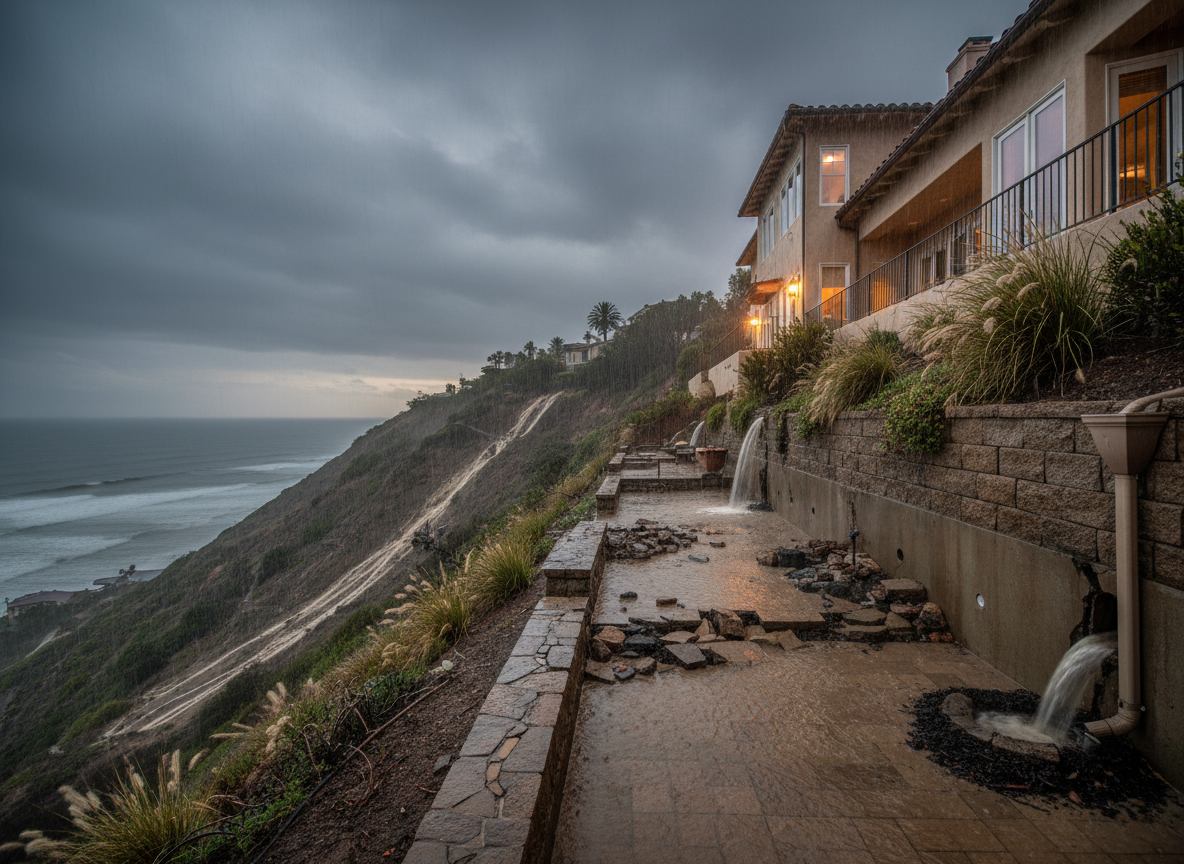
Steep slopes throughout Rancho Palos Verdes accelerate surface water flow during rain events, often overwhelming standard drainage systems and directing water toward foundations within 24 to 48 hours of sustained precipitation. This rapid movement stems from the mild Mediterranean climate moderated by Pacific Ocean breezes, which allows dry periods followed by intense downpours that erode topsoil and saturate subgrades around properties in Portuguese Bend and near the Rolling Hills Estates border.
Slope Erosion Patterns in Portuguese Bend and Seaview
Erosion on slopes exceeding 20 percent grade removes protective soil layers around homes in Portuguese Bend and Seaview, exposing footings to constant moisture. Pacific breezes keep surface soils drier on average, yet when storms arrive they concentrate runoff into channels that carve new paths along driveways and retaining walls. Owners near Point Vicente Lighthouse report repeated soil loss after winter rains, with gullies forming beside older ranch-style homes built on fill material that settles unevenly. Proper grading that directs water to street drains or bioswales reduces velocity and prevents undercutting of landscape walls common in these neighborhoods.
Foundation and Retaining Wall Failures Near Terranea
Properties bordering Terranea Resort and along Palos Verdes Drive West experience hydrostatic pressure buildup behind retaining walls when French drains clog with clay-laden soil. The Los Angeles County hillside soils expand when wet, pushing against concrete foundations and creating hairline cracks that admit water into crawl spaces. Homes constructed before 1980 often lack modern perimeter drains, allowing water to pool against slabs for days after rainfall ends. Installing cleanouts every 50 feet and routing discharge to daylight away from structures addresses the root cause before moisture migrates indoors.
Impact of Ocean-Moderated Rains on Local Drainage
The Pacific influence produces fog and light drizzle most months, yet El Niño winters can deliver 8 to 12 inches in a single storm, exceeding the capacity of 4-inch roof leaders and yard drains on sloped lots. Water then sheets across patios in Terranea and Abalone Cove areas, entering garage thresholds or basement windows. Linking drainage upgrades to water damage mitigation prevents secondary issues such as mold growth that develops within 48 hours of saturation in wall cavities.
Practical Assessment Steps for Steep-Lot Owners
Walk the perimeter after the first heavy rain and note where water pools within 10 feet of the foundation. Check cleanouts at Los Verdes Golf Course-adjacent properties for sediment buildup, then trace flow paths toward neighboring lots in San Pedro or Rolling Hills. Document cracks wider than 1/16 inch in stucco or concrete, as these indicate movement from saturated soils. Scheduling an inspection with a local restoration team familiar with water leak restoration helps quantify repair scope before minor seepage escalates during the next storm season.
Long-Term Drainage Upgrades and Cost Considerations
Regrading a 2,000-square-foot slope lot typically requires 40 to 60 cubic yards of engineered fill plus new 6-inch perforated pipe, with total project costs ranging from $8,000 to $18,000 depending on access constraints near the address at 31204 Palos Verdes Dr W. Adding catch basins at low points and connecting them to municipal storm drains in Palos Verdes Estates reduces recurrence. Reviewing what affects the cost of water damage restoration in Rancho Palos Verdes shows that proactive slope drainage work lowers future extraction and drying expenses by limiting water volume that enters structures.