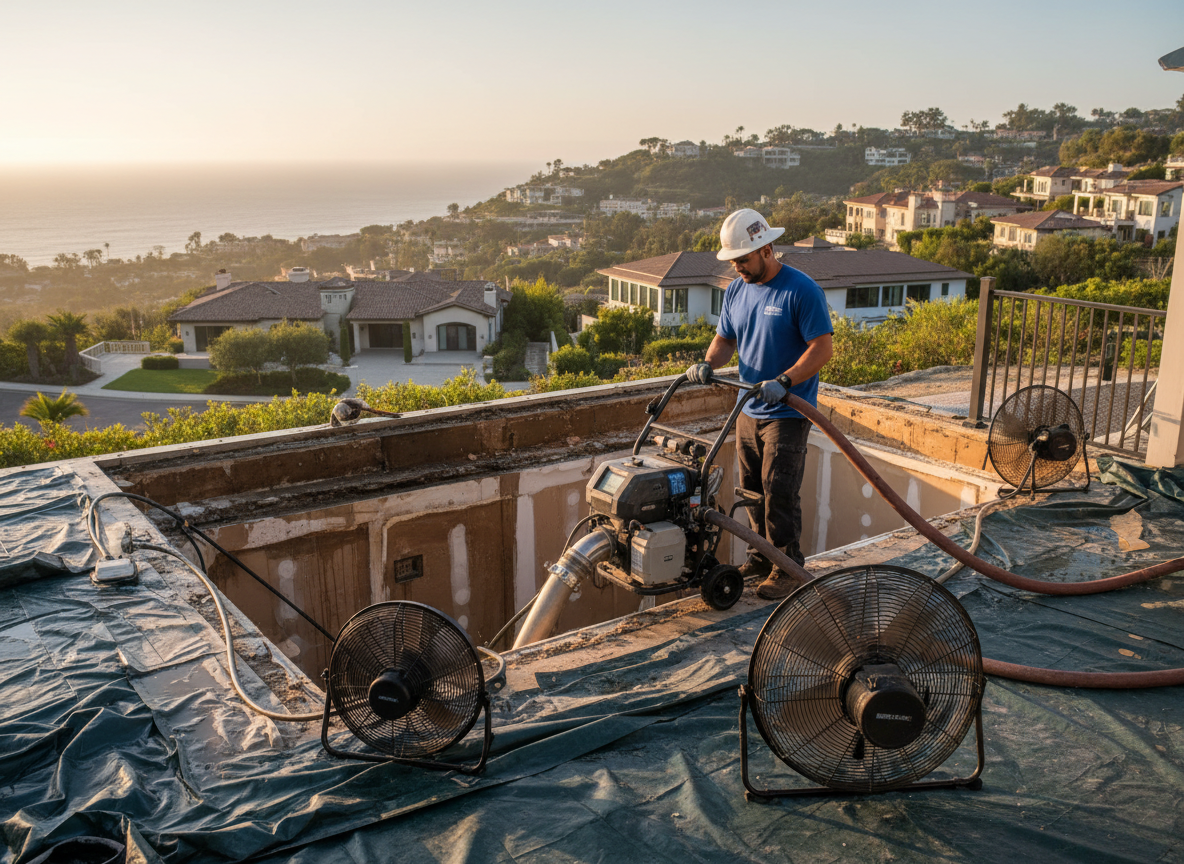
Rancho Palos Verdes homes near the Rolling Hills Estates border and in Portuguese Bend often sit on slopes where ocean-moderated air keeps humidity elevated year-round. Water damage mitigation here starts with isolating affected zones in stucco and older wood-frame structures common to the area. Technicians map moisture migration through crawl spaces and under tile roofs that collect condensation from Pacific breezes. Delaying extraction allows salts from marine air to corrode framing and wiring, especially in neighborhoods around Abalone Cove Shoreline Park.
Mitigation crews focus on rapid drying of plaster and drywall in homes built before current Los Angeles County moisture-barrier codes. In Seaview and near Los Verdes Golf Course, irrigation runoff and fog drip frequently enter foundation walls. Equipment placement must account for narrow driveways and steep lots that limit access for large dehumidifiers. Failure to address hidden pockets behind built-in cabinetry or in Terranea Resort-adjacent condos leads to recurring mold within weeks.
Edge cases include water trapped between layers of clay tile roofing and underlayment on south-facing slopes. Crews use moisture meters calibrated for the local Mediterranean conditions to confirm dryness before reconstruction. Homes bordering San Pedro sometimes experience tidal influence on lower lots, requiring extra attention to vapor barriers. Upfront assessment at 31204 Palos Verdes Dr W prevents unnecessary demolition while meeting county inspection standards.
Technician insight
In Rancho Palos Verdes, the thing that catches most people out with water damage mitigation is how ocean breezes keep humidity high enough that drying takes longer on north-facing slopes in Portuguese Bend. Homeowners often stop equipment too soon, letting salts from marine air stay in the framing and cause hidden corrosion months later.
Hidden moisture behind hillside stucco
Water from heavy coastal fog entered a Seaview home through a cracked window sill. Inspection revealed saturation in the wall cavity and under the subfloor. Crews extracted water, placed targeted drying equipment, and monitored readings for five days until levels matched surrounding dry areas. The homeowner avoided full wall replacement.
How it works
- 1
Initial Assessment
Technicians arrive 24/7 and document visible water paths through roofs, windows, and grading around Portuguese Bend properties.
- 2
Containment and Extraction
Plastic barriers isolate wet zones while pumps and wands remove standing water from crawl spaces common in hillside homes.
- 3
Drying and Monitoring
Air movers and dehumidifiers run while daily meter readings track progress in older stucco walls near Point Vicente Lighthouse.
- 4
Final Verification
Moisture levels are rechecked against Los Angeles County guidelines before any reconstruction begins.
Pricing
Upfront quotes provided after inspection; final cost depends on square footage, depth of saturation, and access challenges on sloped lots.