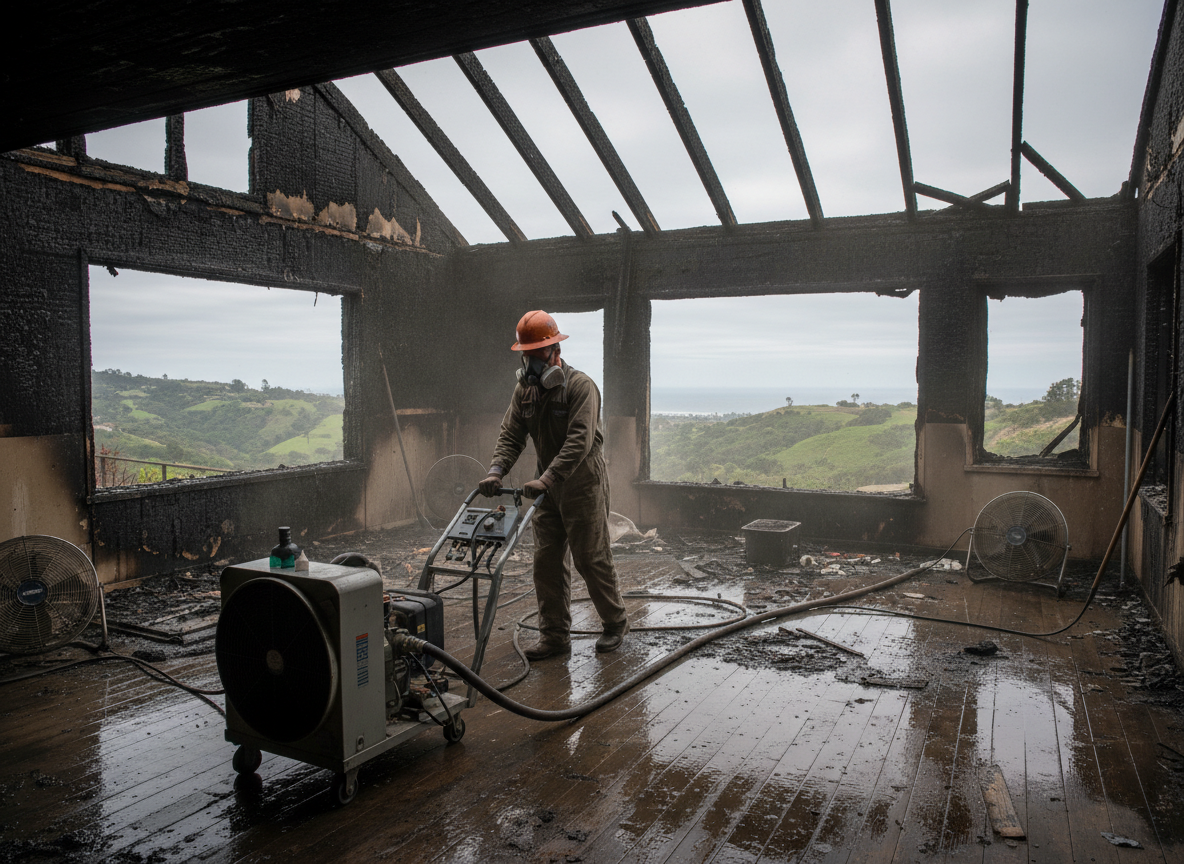
Rancho Palos Verdes homes built on coastal bluffs in neighborhoods like Portuguese Bend and Seaview often feature older stucco and wood framing that trap water from firefighting efforts. Pacific Ocean breezes keep humidity moderate yet slow full drying in enclosed spaces such as attics and under elevated decks, allowing moisture to migrate toward foundations near Abalone Cove Shoreline Park. Technicians must account for slope drainage that carries water downhill toward Terranea Resort properties and the Rolling Hills Estates border, where soil conditions can extend saturation into crawl spaces.
Suppression water frequently mixes with soot on Los Verdes Golf Course adjacent homes, creating acidic residues that stain plaster and corrode metal HVAC components common in mid-century builds. Extraction focuses on layered flooring and wall cavities because ocean-moderated temperatures mask ongoing dampness until mold appears weeks later. Crews use moisture meters on every visit to map migration paths that standard fans miss in these hillside structures.
Edge cases include water that pools behind retaining walls in Portuguese Bend after hillside fires and residue that travels through shared vents in San Pedro border homes. Remediation plans always include verification drying cycles because mild Mediterranean conditions can hide residual moisture in thick plaster walls for extended periods.
Technician insight
In Rancho Palos Verdes the thing that catches most people out with water damage remediation after fire is how ocean breezes mask moisture in older Portuguese Bend homes until it reaches the slab, especially when suppression water runs downhill toward the Seaview side of the property.
Post-Fire Water in Seaview Residence
Suppression water from a small electrical fire soaked into hardwood and drywall near Point Vicente Lighthouse. We found moisture had traveled under the floor toward the slope facing Abalone Cove Shoreline Park. Targeted extraction and extended drying cycles prevented further migration into the stucco walls.
How it works
- 1
Initial Assessment
Inspect all affected rooms plus attics and crawl spaces for hidden moisture using meters and thermal imaging.
- 2
Water Extraction
Remove standing water and saturated materials while protecting intact surfaces from cross-contamination.
- 3
Drying and Monitoring
Set up targeted drying equipment and return daily to track moisture levels until readings stabilize.
- 4
Final Verification
Confirm dry conditions and document the site before any reconstruction begins.
Pricing
Upfront quotes provided after on-site inspection; cost varies with square footage, material types and hidden damage extent.