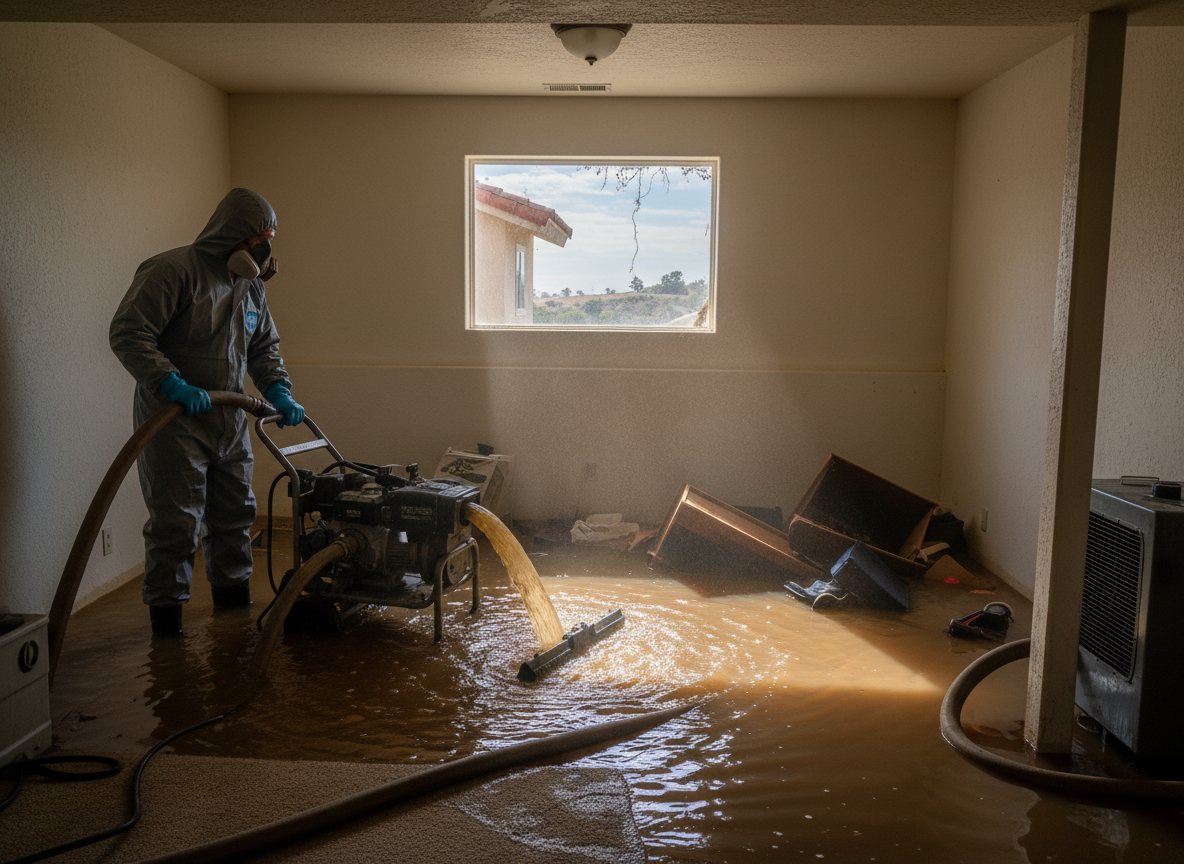
Rancho Palos Verdes sits on hilly coastal terrain where Pacific breezes keep humidity moderate yet persistent, especially in older hillside homes along the Rolling Hills Estates border and in Portuguese Bend. Water cleanup here often involves slab leaks or roof intrusion that travels through stucco and concrete foundations common in 1960s-1980s builds. Extraction must account for clay-heavy soils that slow drainage and can push moisture back into crawl spaces near Abalone Cove Shoreline Park.
Technicians start by mapping moisture with meters because ocean salt air accelerates corrosion in metal framing and electrical boxes. In Seaview and near Terranea Resort, wind-driven rain can force water under tile roofs and into attics, requiring targeted drying behind drywall without full demolition. Los Angeles County codes require proper disposal of contaminated water, so pumps and dehumidifiers run continuously until readings drop below 12 percent moisture content.
Edge cases include hidden saturation in Los Verdes Golf Course-adjacent properties where irrigation runoff combines with storm water. Crews isolate zones to prevent cross-contamination and use air movers positioned to follow the slope of the lot. Homeowners in Palos Verdes Estates and Rolling Hills often discover issues only after drywall softens because the mild climate masks early musty odors.
Cleanup finishes with HEPA filtration to remove salt residue that can otherwise reappear as efflorescence on concrete surfaces. Service runs 24/7 from the shop at 31204 Palos Verdes Dr W to reach jobs in San Pedro or nearby coastal pockets before secondary damage sets in.
Technician insight
In Rancho Palos Verdes the thing that catches most people out with water cleanup services is how the clay soil and gentle ocean slope keep pushing moisture back into the foundation for days after the rain stops. Homeowners in Portuguese Bend or near Point Vicente Lighthouse often think the job is done once the carpet is pulled, but we have to keep equipment running longer because the mild Mediterranean climate hides the humidity that re-soaks drywall from below.
Hidden Attic Leak After Wind-Driven Rain
A homeowner in Seaview noticed ceiling stains two days after a coastal storm. Inspection found water had entered under the tile roof and traveled along rafters into insulation over the garage. We extracted the trapped moisture, dried the attic space without removing the entire ceiling, and confirmed readings stayed low despite continued ocean breezes.
How it works
- 1
Initial Assessment
Arrive on site, locate the water source, and document affected materials in neighborhoods from Portuguese Bend to Seaview.
- 2
Water Extraction
Remove standing water with pumps and wands suited to sloped lots and slab-on-grade homes common in Rancho Palos Verdes.
- 3
Drying and Dehumidification
Place equipment to follow terrain contours and pull moisture from stucco walls and attic spaces influenced by ocean air.
- 4
Final Moisture Verification
Test all surfaces until dry, then advise on any Los Angeles County permit needs for repairs.
Pricing
Upfront quotes after inspection; cost depends on volume of water, number of affected rooms, and access challenges from hillside lots.