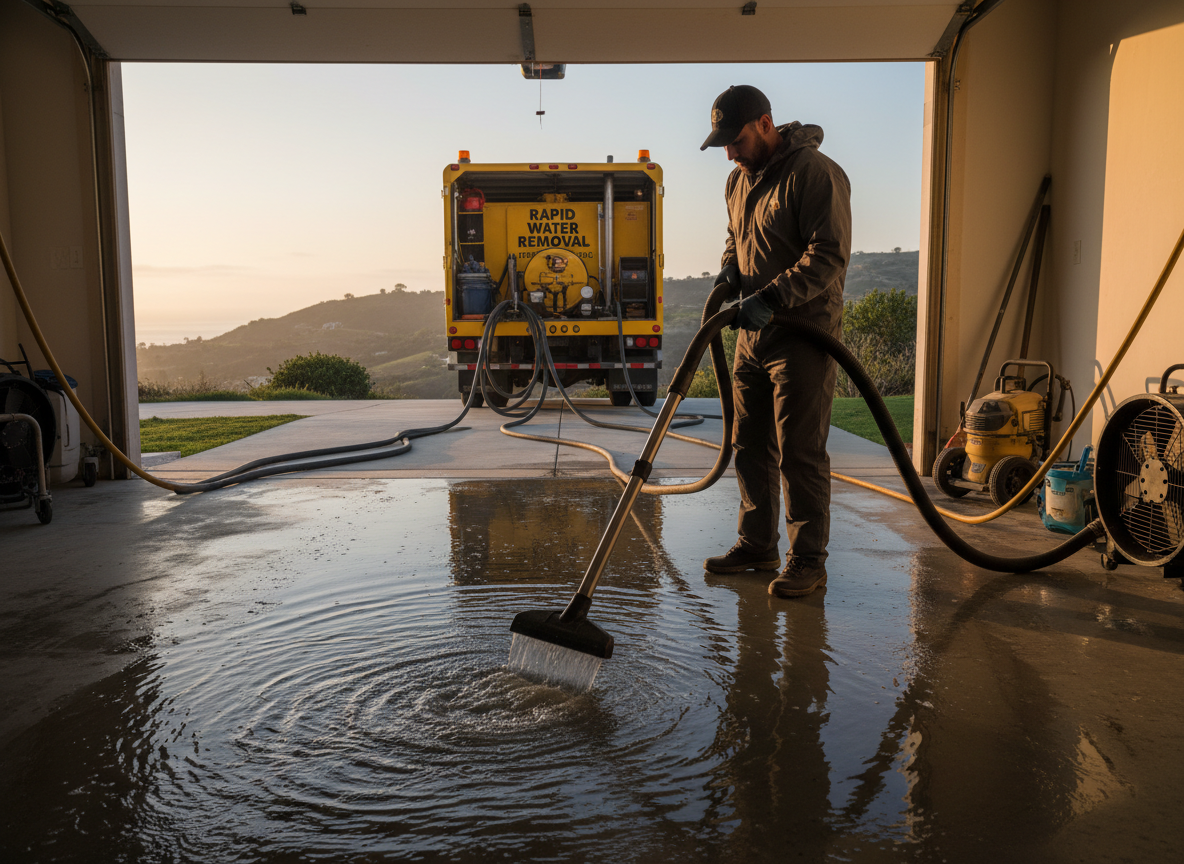
Rancho Palos Verdes sits on hilly coastal terrain where winter rains meet Pacific Ocean breezes and clay-rich soils that hold moisture longer than inland Los Angeles County spots. Rapid water extraction starts with truck-mounted pumps to pull standing water from slabs and crawl spaces before it migrates into Portuguese Bend or Rolling Hills Estates Border foundations. Older hillside homes near Terranea often have pier-and-beam construction that traps water against footings, requiring extraction within hours to prevent salt-air corrosion on metal straps and joists.
Mild Mediterranean conditions mask the reality that even moderate storms send runoff down slopes toward Abalone Cove Shoreline Park and Los Verdes Golf Course, overwhelming French drains in Seaview and nearby Palos Verdes Estates properties. Extraction crews must account for the way ocean humidity slows evaporation, so we follow pump work with targeted air movers placed at subfloor vents rather than relying on open windows. Homes built before 1970 near the Point Vicente Lighthouse frequently lack modern vapor barriers, so technicians document every moisture reading to avoid hidden pockets that later trigger drywall failure.
Coastal access roads in Rancho Palos Verdes limit equipment size, so crews stage smaller portable extractors at Terranea Resort-area properties and carry them down steep driveways. Water from pipe bursts or roof leaks mixes with alkaline soil common along the Rolling Hills border, raising pH and accelerating damage to concrete. Extraction logs include photos of every affected room and soil test strips to guide later neutralization steps that protect both the structure and surrounding landscaping.
Technician insight
In Rancho Palos Verdes, the thing that catches most people out with rapid water extraction is how the clay-heavy soils on Portuguese Bend slopes keep pulling moisture back into pier footings long after pumps leave, especially when ocean breezes keep humidity above 70 percent for days.
Pipe burst under Seaview home
Water from a failed supply line spread across a crawl space on a sloped Seaview lot. Extraction revealed water had wicked into the rim joists because the lot drains toward Abalone Cove. We removed standing water with portable units, placed drying equipment under the floor, and returned daily until readings matched dry standards. The homeowners avoided mold and kept their original hardwood intact.
How it works
- 1
On-site assessment
Technicians inspect all affected rooms, check crawl spaces and slabs, and map moisture migration paths specific to Rancho Palos Verdes hillside lots.
- 2
Standing water removal
Truck-mounted and portable pumps extract water from floors, carpets, and low areas while protecting nearby landscaping and driveways.
- 3
Targeted drying setup
Air movers and dehumidifiers are positioned based on home age, construction type, and exposure to ocean breezes to reach hidden wall cavities.
- 4
Moisture verification
Final readings confirm levels match unaffected areas before equipment removal and documentation for insurance.
Pricing
Upfront quotes after inspection; cost depends on water volume, access to hillside lots, and whether extraction occurs in older Portuguese Bend or Seaview homes.