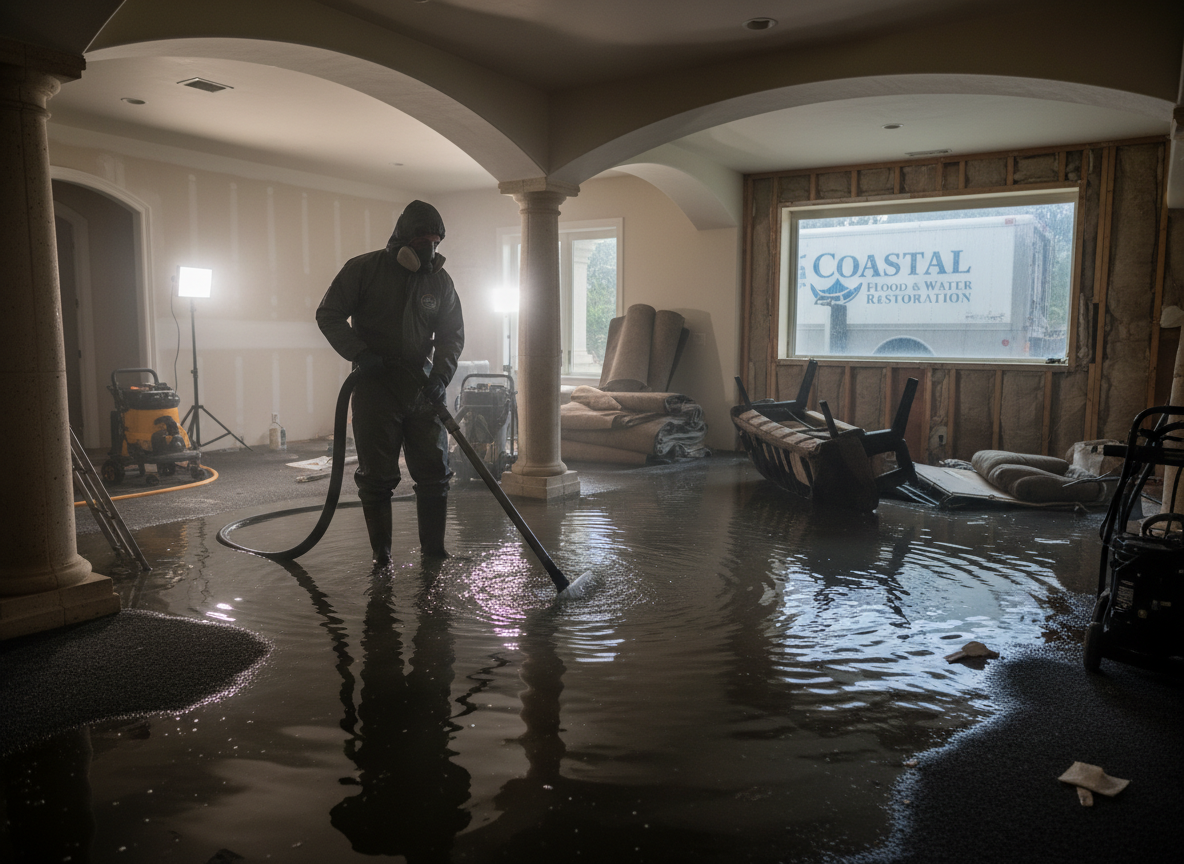
Rancho Palos Verdes homes built on the peninsula's slopes often have lower-level spaces that collect water during winter rains, especially near Portuguese Bend and the Rolling Hills Estates border. Ocean-moderated air keeps humidity higher than inland Los Angeles County spots, so moisture lingers in concrete and framing long after visible water is gone. We extract standing water, remove saturated drywall and insulation, then use targeted drying equipment that accounts for salt-laden air accelerating corrosion on metal fixtures and electrical boxes.
Homes near Terranea Resort and Seaview frequently sit on compacted fill or older foundations that direct surface flow straight into basements. Plumbing leaks or heavy coastal drizzle can overwhelm French drains installed decades ago. Our crews map moisture with meters before any tear-out, document hidden pockets behind stairwells or under finished flooring, and coordinate disposal so debris does not affect the nearby Abalone Cove Shoreline Park watershed.
After extraction we run industrial dehumidifiers calibrated for the mild Mediterranean climate rather than desert protocols used in San Pedro or Palos Verdes Estates. This prevents secondary mold growth in the cooler, breezy conditions typical here. Final clearance testing confirms drywall and subfloors meet industry dryness standards before any reconstruction begins.
Technician insight
In Rancho Palos Verdes the thing that catches most people out with basement flood cleanup is the way Pacific Ocean breezes keep relative humidity elevated even on mild days, so standard drying times used inland fail here and older hillside homes near Los Verdes Golf Course often have hidden voids under concrete slabs that trap moisture for weeks.
Portuguese Bend lower level after winter runoff
Water entered through an old foundation crack during an extended coastal drizzle. Meters showed saturation behind finished walls and under the slab. We extracted water, removed baseboards and drywall, then ran drying equipment for ten days until readings matched unaffected areas. The homeowner could start repairs without hidden mold risk.
How it works
- 1
Emergency Assessment
We arrive within hours, locate the water source, and document affected materials while protecting unaffected areas of the home.
- 2
Water Extraction
Standing water is removed with submersible pumps and wands suited to the tight access common in peninsula basements.
- 3
Drying and Monitoring
Air movers and dehumidifiers run on a schedule adjusted for Pacific breezes, with daily moisture readings until levels stabilize.
- 4
Sanitization and Clearance
Antimicrobial treatment is applied where needed, followed by independent verification that the space is dry and safe for rebuild.
Pricing
Upfront quotes after on-site inspection; final cost depends on water volume, materials affected, and drying duration required by local humidity.