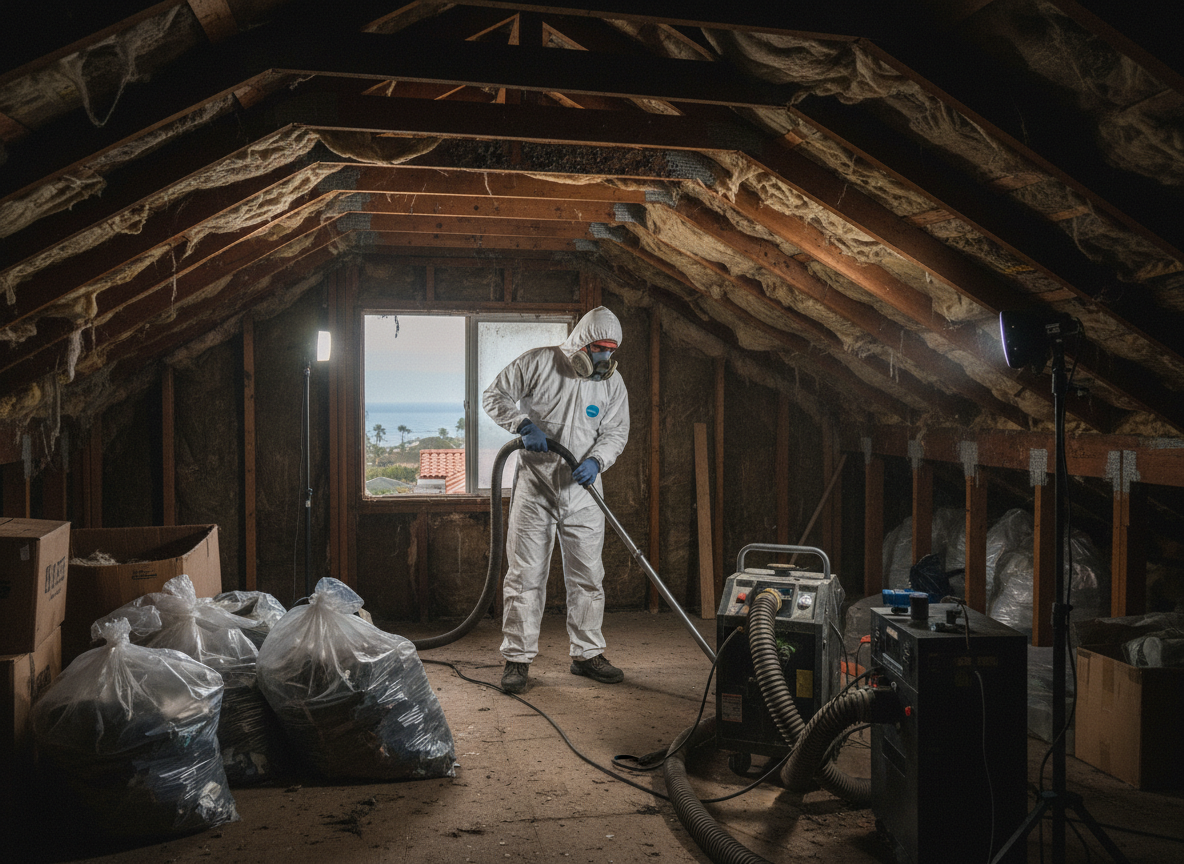
Rancho Palos Verdes homes built before the 1980s often feature vented attics with limited insulation that trap moisture carried inland by Pacific Ocean breezes. The mild Mediterranean climate keeps daytime temperatures moderate yet allows overnight humidity spikes that condense on roof sheathing near Portuguese Bend and Seaview. Water damage restoration crews see this pattern most often along the Rolling Hills Estates border where older single-story ranch homes sit on slopes that funnel fog upward into eaves. Proper remediation requires negative-air machines and HEPA filtration to keep spores from drifting into living spaces below.
Mold colonies in these attics frequently grow on OSB decking and kraft-faced batts rather than obvious roof leaks. Crews must pull back insulation carefully to avoid collapsing ceilings in rooms with textured plaster common in Terranea-area properties. Los Angeles County building codes require documentation of moisture sources before any drywall or sheathing replacement, so technicians photograph every step and note ventilation shortfalls around Point Vicente Lighthouse ridge lines. Skipping this step leaves homeowners facing repeat growth when ocean air returns each spring.
After removal, crews install ridge vents and baffles sized for the specific roof pitch found on Los Verdes Golf Course-adjacent streets. Dehumidifiers run until wood moisture content drops below 12 percent, a threshold verified with pin meters because the steady sea breeze can mask lingering dampness. Final clearance includes air sampling at the 31204 Palos Verdes Dr W shop before homeowners re-enter the space.
Seasonal Guidance
Ocean breezes increase attic humidity most between December and March, so inspections before winter rains prevent larger colonies. Homes near Abalone Cove Shoreline Park also see extra moisture from salt air that corrodes metal fasteners and creates new condensation points.
Technician insight
In Rancho Palos Verdes, the thing that catches most people out with attic mold remediation is how the steady Pacific Ocean breezes push humid air into older attics along the Portuguese Bend slope even when no roof leak exists, so homeowners often miss the condensation source until insulation is already saturated.
Condensation Mold Near Seaview
A homeowner in Seaview noticed a musty odor after winter fog. Inspection revealed mold on north-facing rafters from ocean-breeze condensation in a 1970s home. Crews contained the space, removed affected insulation, treated the sheathing, and added ridge vents to improve airflow. Follow-up sampling showed levels returned to outdoor baselines.
How it works
- 1
Initial Inspection
Technicians enter the attic from Rancho Palos Verdes access points and map moisture with thermal imaging and pin meters while noting insulation type and roof age.
- 2
Containment Setup
Plastic barriers and negative air machines isolate the attic from living areas to keep spores out of Portuguese Bend and Seaview homes.
- 3
Mold Removal
HEPA vacuuming and antimicrobial treatment address growth on sheathing and rafters without damaging original plaster ceilings below.
- 4
Drying and Ventilation Upgrade
Dehumidifiers run until readings stabilize, then new ridge vents are added to counter Pacific breezes common near Terranea Resort.
- 5
Final Clearance
Air samples confirm spore levels match outdoor baselines before insulation is replaced and the space is returned to service.
Pricing
Pricing varies with attic size, mold extent, and any needed ventilation changes; upfront quotes provided after inspection.